
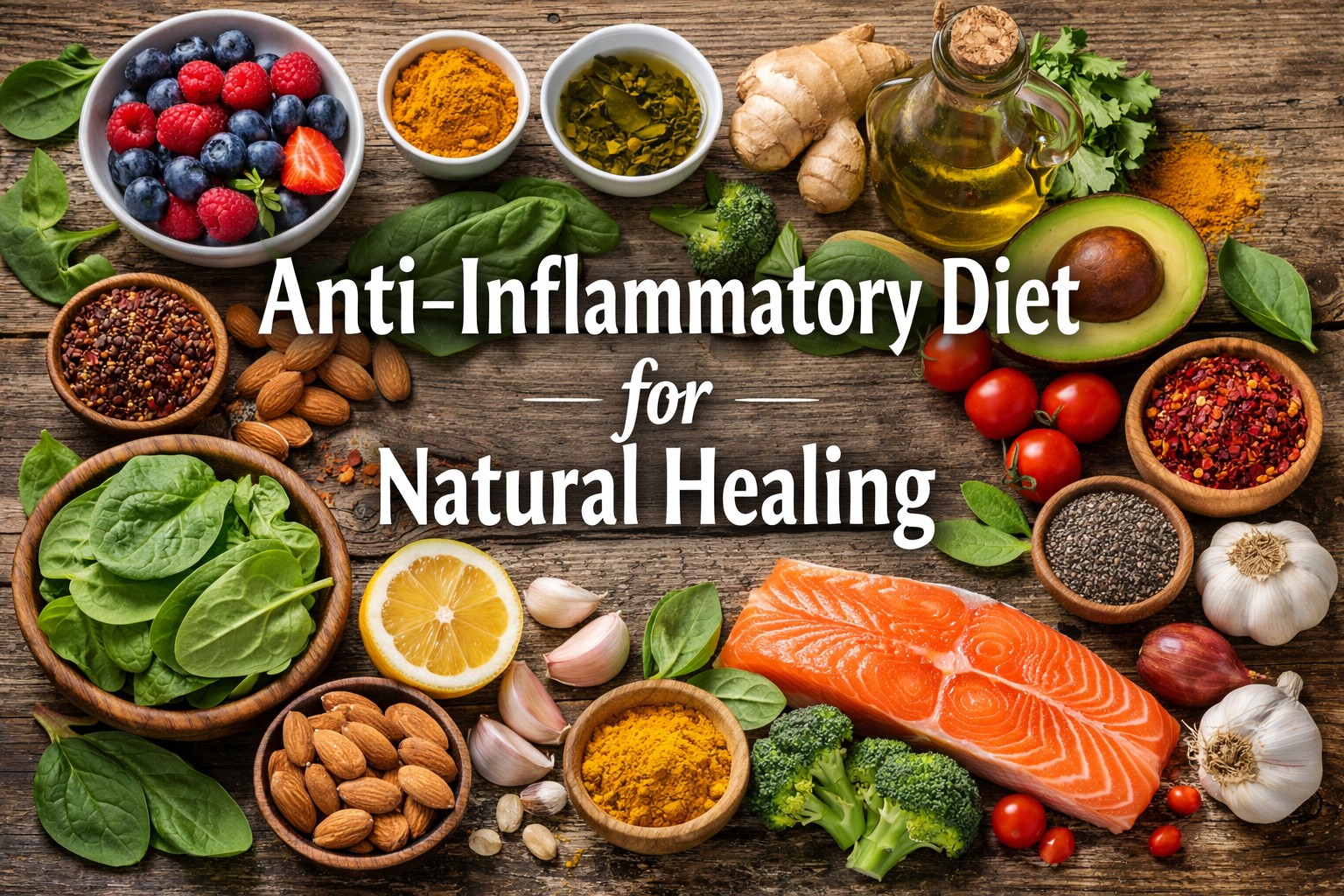
Anti-Inflammatory Diet for Natural Healing: A Complete Science-Backed Guide
Chronic inflammation is increasingly recognized as a hidden driver behind many modern health problems — from digestive discomfort and joint pain to skin issues, fatigue, and poor immunity. While short-term inflammation helps the body heal injuries and fight infections, persistent low-grade inflammation can quietly damage tissues over time.
Research highlighted by organizations such as the National Institutes of Health shows that long-term inflammation is linked to metabolic disorders, autoimmune conditions, cardiovascular disease, and gut imbalance.
The good news: daily food choices strongly influence inflammatory processes in the body. An Anti-Inflammatory Diet for Natural Healing focuses on whole, nutrient-dense foods that calm inflammatory responses, support gut health, and promote cellular repair.
This guide explains:
- What inflammation really is
- How diet affects it
- Which foods reduce inflammation
- Which foods worsen it
- A simple daily meal plan
- How long results take
Let’s begin with the basics.
What Is Inflammation and Why Does It Matter?
Inflammation is the immune system’s natural response to injury, toxins, or infection.
Acute inflammation (helpful)
- Swelling after injury
- Fever during infection
- Temporary redness or soreness
Chronic inflammation (harmful)
- Digestive discomfort
- Joint stiffness
- Persistent fatigue
- Skin flare-ups
- Hormonal imbalance
Chronic inflammation often develops silently due to:
- Poor diet
- Chronic stress
- Lack of sleep
- Sedentary lifestyle
- Gut microbiome imbalance
Food can either fuel inflammation or calm it.
How Diet Influences Inflammation
Certain foods trigger inflammatory pathways by:
- Raising blood sugar rapidly
- Increasing oxidative stress
- Disrupting gut bacteria
- Activating immune responses
Conversely, anti-inflammatory foods:
- Provide antioxidants
- Balance blood sugar
- Support beneficial gut microbes
- Reduce inflammatory signaling molecules
Medical institutions such as Cleveland Clinic emphasize that long-term dietary patterns strongly affect inflammatory markers.
👉 If digestion is your main concern, combining this diet with natural remedies can bring faster relief. Check our in-depth article on natural remedies for digestive health on Gut Health Foods for Better Digestion
Best Anti-Inflammatory Foods for Natural Healing
1. Leafy Green Vegetables
Examples: spinach, kale, fenugreek leaves, moringa
Rich in:
- Vitamin C
- Polyphenols
- Fiber
These nutrients help reduce oxidative stress and support detox pathways.
How to use: Add to lunch or dinner daily.
2. Berries
Examples: blueberries, strawberries, Indian gooseberry (amla)
Contain anthocyanins that help neutralize free radicals and reduce inflammatory damage.
How to use: Add to breakfast or smoothies.
3. Turmeric
Curcumin, turmeric’s active compound, has powerful anti-inflammatory properties widely studied in herbal medicine research.
How to use:
Add turmeric to dal, soups, or warm milk.
Tip: Combine with black pepper for better absorption.
4. Ginger
Ginger contains gingerol, which may help reduce inflammatory pathways and support digestion.
How to use:
Fresh ginger tea or added to meals.
5. Healthy Fats
Sources:
- Nuts
- Seeds
- Olive oil
- Fatty fish
Healthy fats help regulate immune responses and protect cell membranes.
6. Whole Grains
Examples:
- Brown rice
- Oats
- Millets
They release energy slowly and help prevent blood sugar spikes that can trigger inflammation.
7. Fermented Foods
Examples:
- Yogurt
- Buttermilk
- Idli/dosa batter
- Homemade pickles (natural fermentation)
Support beneficial gut bacteria, which influence inflammatory balance.
8. Green Tea
Contains catechins that help reduce oxidative stress.
How to use: 1–2 cups daily.
👉 You can explore more healing beverages in our guide on natural herbal teas and their preparation available on Herbal Tea Recipes
9. Garlic & Onions
Contain sulfur compounds that support immune regulation and detox pathways.
10. Colorful Vegetables
Examples:
- Carrots
- Beetroot
- Tomatoes
- Capsicum
Rich in antioxidants that protect tissues from inflammatory damage.
👉 One of the most researched anti-inflammatory spices is turmeric: Turmeric Benefits: Science, Uses, and Simple Ways to Use Turmeric Daily
Foods That Increase Inflammation
Reducing these is just as important as adding healthy foods.
1. Refined Sugar
Linked to blood sugar spikes and inflammatory responses.
2. Ultra-Processed Foods
Often contain preservatives, unhealthy fats, and additives.
3. Excess Refined Flour
White bread, pastries, and processed snacks can increase inflammatory markers.
4. Deep-Fried Foods
Contain oxidized oils that stress the body.
5. Excess Alcohol
Can disrupt gut lining and increase inflammation.
Sample One-Day Anti-Inflammatory Meal Plan
Morning
Warm water with lemon and soaked almonds
Breakfast
Oats with berries, flaxseeds, and cinnamon
Mid-morning
Green tea or herbal tea
Lunch
Brown rice or millet
Vegetable curry with turmeric and ginger
Curd or buttermilk
Evening snack
Fruit or handful of nuts
Dinner
Light vegetable soup
Whole-grain roti with sautéed greens
This simple pattern supports digestion and reduces inflammatory triggers.
How Long Does an Anti-Inflammatory Diet Take to Work?
Results vary:
- Digestive comfort: 1–2 weeks
- Energy improvement: 2–3 weeks
- Skin clarity: 3–6 weeks
- Joint comfort: 4–8 weeks
Consistency matters more than perfection.
Lifestyle Habits That Enhance the Diet
An Anti-Inflammatory Diet for Natural Healing works best with:
- 7–8 hours of sleep
- Daily walking or gentle exercise
- Stress management practices
- Adequate hydration
Food is powerful, but healing is holistic.
👉 https://www.health.harvard.edu/staying-healthy/foods-that-fight-inflammation
Safety Considerations
- Sudden dietary changes should be gradual.
- People with medical conditions or allergies should consult healthcare professionals.
- This diet supports healing but does not replace medical treatment.
Responsible use improves long-term sustainability.
Frequently Asked Questions
Is an anti-inflammatory diet the same as a weight-loss diet?
Not necessarily. While weight balance may improve, the primary goal is reducing inflammation and improving overall health.
Can this diet help skin problems?
Yes, reduced inflammation and better gut health often support clearer skin, though results vary.
Do I need expensive superfoods?
No. Simple local foods like turmeric, greens, lentils, and seasonal fruits are effective.
Can I follow this diet long-term?
Yes. It’s designed as a sustainable lifestyle rather than a short-term plan.
Final Thoughts
An Anti-Inflammatory Diet for Natural Healing is not about restriction — it’s about choosing foods that help the body repair, rebalance, and function optimally.
By focusing on whole foods, reducing processed ingredients, and supporting gut health, you create a foundation for:
- Better digestion
- Improved energy
- Healthier skin
- Stronger immunity
- Long-term wellness
Small daily choices create powerful long-term results.
⚕️Medical Disclaimer
The information provided in this article is for educational and informational purposes only and is not intended as a substitute for professional medical advice, diagnosis, or treatment. Always seek the guidance of a qualified healthcare provider with any questions you may have regarding a medical condition, dietary change, or wellness practice. Never disregard or delay seeking professional medical advice because of information found on this website.
Natural remedies and lifestyle suggestions may not be suitable for everyone. Results may vary depending on individual health conditions.



6 thoughts on “Anti-Inflammatory Diet for Natural Healing”